As healthcare continues to evolve, more people are embracing preventive care and natural healing alongside conventional medicine. This growing shift has increased the demand for professionals who can promote wellness through evidence-based lifestyle changes, yoga, nutrition, and naturopathy. As a result, the BNYS Course (Bachelor of Naturopathy and Yogic Sciences) has become one of the fastest-growing healthcare programmes all over world.
If you’re considering a career in holistic healthcare, this guide covers everything you need to know about the BNYS course, including eligibility, admission process , duration, syllabus, career opportunities, and future scope, helping you make an informed decision about your future.
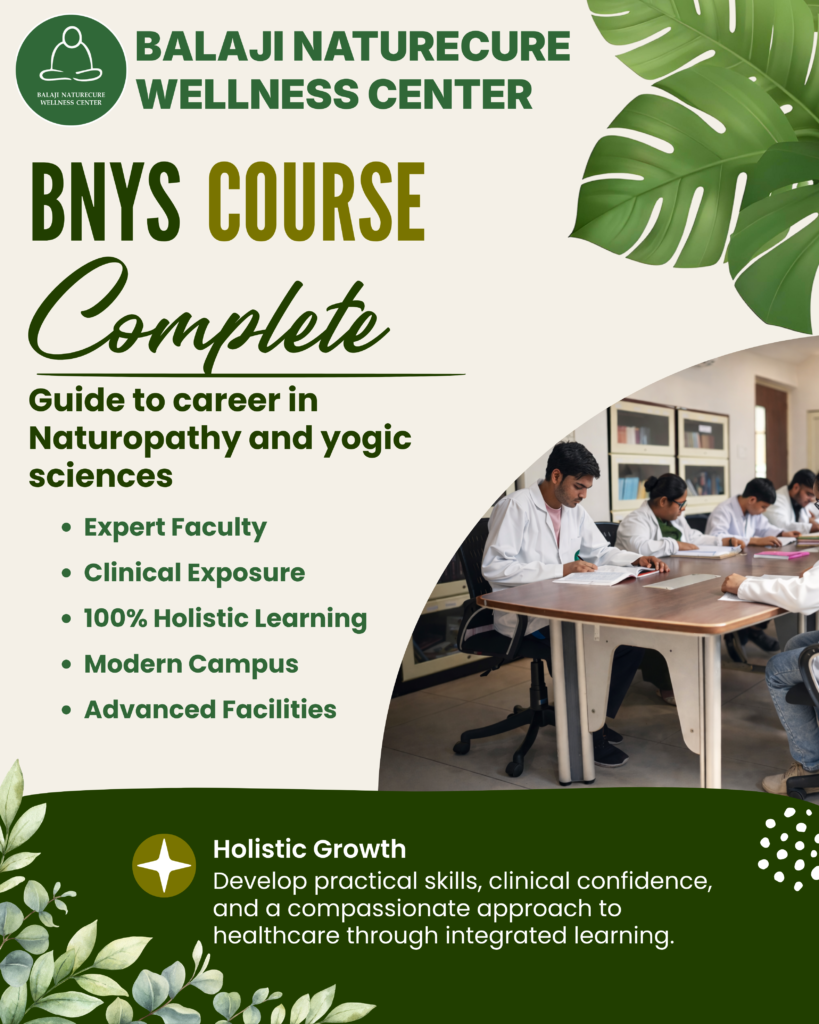
Undergraduate healthcare programme that combines modern medical sciences with holistic treatment, naturopathy and yoga-based therapies. The course is recognised by the Ministry of AYUSH, Government of India.
The BNYS curriculum provides students with a strong foundation in subjects such as Anatomy, Physiology, Biochemistry, Pathology, Microbiology, Community Medicine, Psychology and Clinical Diagnosis, while also offering specialised training in natural therapies, including Hydrotherapy, Yoga Therapy, Diet Therapy, Mud Therapy, Manipulative Therapy, Fasting Therapy, Acupuncture (where included in the curriculum), and Lifestyle Counselling.
What sets BNYS apart is its holistic approach to healthcare. Rather than focusing solely on symptom management, the programme emphasises disease prevention, natural healing, and improving overall health through evidence-informed lifestyle interventions.
After successfully completing the course and fulfilling the applicable registration requirements, BNYS graduates are eligible to practise within the scope permitted under the relevant laws and regulations governing naturopathy and yogic sciences in their jurisdiction.
Naturopathy is a holistic system of healthcare that focuses on supporting the body’s natural ability to heal itself through healthy lifestyle practices and natural therapies. While modern naturopathy developed in Europe during the 19th century, its principles are rooted in ancient healing traditions that emphasised the importance of nutrition, fresh air, water, exercise, and natural living.
In India, naturopathy gained prominence during the early 20th century and was strongly supported by Mahatma Gandhi, who believed that simple living, balanced nutrition, and natural healing were essential for maintaining good health. Over time, naturopathy became an integral part of India’s traditional healthcare system and is now promoted under the Ministry of AYUSH.
Yoga has been an integral part of Indian culture for thousands of years, originally developed as a practice to achieve physical, mental, and spiritual well-being. Over the years, it has evolved beyond a traditional discipline into a scientifically studied therapeutic approach used to support overall health and manage various lifestyle-related conditions.
Yoga therapy combines yoga philosophy, history of yoga, practices such as asanas (physical postures), pranayama (breathing techniques), meditation, and relaxation methods to improve flexibility, strength, mental wellness, and quality of life. Its growing acceptance in healthcare has led to its inclusion in hospitals, rehabilitation centres, wellness programmes, and preventive healthcare initiatives worldwide.
The philosophy of naturopathy is based on the belief that the human body possesses an inherent ability to maintain and restore health when provided with the right environment and lifestyle. Rather than focusing solely on symptoms, naturopathy aims to identify and address the underlying factors that contribute to illness.
Some of its core principles include:
Yoga is one of the core subjects of the BNYS curriculum and plays a vital role in holistic healthcare. Students receive both theoretical knowledge and practical training in therapeutic yoga techniques that can support physical fitness, stress management, rehabilitation, and overall well-being.
The programme includes training in:
By integrating modern medical sciences with naturopathy and yoga, the BNYS programme prepares students to promote preventive healthcare, support healthy lifestyles, and contribute to the growing field of holistic wellness.
The demand for the Bachelor of Naturopathy and Yogic Sciences (BNYS) has grown significantly in recent years as more people recognise the importance of preventive healthcare and holistic wellness. Rather than focusing only on treating diseases, BNYS promotes healthy lifestyles, natural healing, and long-term well-being.
Several factors have contributed to its increasing popularity:
Pursuing a BNYS degree offers several academic and professional advantages:
The BNYS course is an excellent choice for students who are passionate about healthcare and want to contribute to society through holistic and preventive medicine.
This course is ideal for students who:
Requirement | Detail |
Academic qualification | Class 12 (10+2) with Physics, Chemistry and Biology (PCB) from a recognised board |
Minimum marks | Generally 50% aggregate in PCB for General/OBC category; around 45% for SC/ST/reserved categories (varies by state/institution) |
Minimum age | 17 years at the time of admission |
Upper age limit | Typically up to 35 years (age norms can vary; check with the specific counselling authority) |
Nationality | Indian nationals; NRI/foreign national seats available at some institutions under separate quotas |
The BNYS course is a 5.5-year undergraduate programme designed to provide students with comprehensive knowledge of modern medical sciences, naturopathy, and yogic sciences.
The programme consists of:
Throughout the course, students study subjects such as anatomy, physiology, pathology, microbiology, yoga therapy, naturopathy, nutrition, clinical diagnosis, and various natural treatment modalities. Alongside classroom learning, the curriculum includes laboratory work, hospital postings, clinical training, and practical sessions to prepare students for professional practice.
The curriculum and academic structure are prescribed by the relevant regulatory authorities, while minor variations in subject sequencing and examination patterns may exist between universities.
Course | Total Duration | Internship |
BNYS | 5.5 years | 1 year |
BAMS | 5.5 years | 1 year |
BHMS | 5.5 years | 1 year |
BPT | 4.5 years | 6 months |
MBBS | 5.5 years | 1 year |
A mandatory 12-month rotating internship across departments including general OPD, naturopathy wards, yoga therapy units, physiotherapy, dietetics, and depending on the affiliated hospital, exposure to general medicine wards for cross-referral understanding.
One of the most valuable aspects of the BNYS course is its emphasis on practical learning. After completing the academic programme, students undertake a one-year compulsory rotatory internship, where they gain hands-on clinical experience under the supervision of experienced healthcare professionals.
During the internship, students are exposed to various clinical departments and learn how to assess patients, prepare treatment plans, and provide holistic care using naturopathy and yoga-based therapies. This practical training helps bridge the gap between classroom learning and real-world healthcare practice.
Beyond individual therapies, BNYS training builds toward a broader clinical skill set:
This is also where BNYS graduates most naturally intersect with modern public-health priorities India’s rising non-communicable disease burden is, in large part, a lifestyle-disease burden, and BNYS training is built specifically around that gap.
BNYS graduates have a genuinely broader set of career options than many people assume. Here’s a realistic map of where the degree leads:
Compared to setting up an allopathic clinic, the capital investment required to start a naturopathy practice is generally lower, which makes entrepreneurship a realistic near-term option for many graduates rather than a distant aspiration.
The future of Bachelor of Naturopathy and Yogic Sciences (BNYS) is promising as the demand for preventive healthcare, holistic wellness, and lifestyle management continues to grow worldwide. With increasing awareness of natural healing and healthy living, BNYS graduates have opportunities across clinical practice, education, research, wellness, and public health.
India’s healthcare landscape is evolving rapidly, creating new opportunities for BNYS professionals.
Some of the key factors contributing to the growing demand include:
The global wellness industry has witnessed significant growth in recent years, creating opportunities for professionals trained in naturopathy and yoga.
BNYS graduates may find opportunities in:
However, graduates planning to practise clinically outside India should note that professional licensing, registration, and eligibility requirements vary from country to country. Additional examinations, certifications, or local qualifications may be required before practising internationally.
After completing the BNYS programme, graduates can pursue higher education to expand their knowledge, specialise in specific fields, or enhance their career prospects.
Some popular options include:
Pursuing postgraduate education can open doors to advanced clinical practice, teaching positions, research careers, healthcare administration, and leadership roles within the growing wellness and AYUSH sectors.
Overall, the future of BNYS is closely linked to the increasing global focus on preventive healthcare, healthy lifestyles, and holistic medicine. Graduates who continue to develop their clinical skills, pursue higher education, and stay updated with advancements in the field are well-positioned for long-term professional growth.
The Bachelor of Naturopathy and Yogic Sciences (BNYS) offers several advantages for students who wish to build a career in holistic and preventive healthcare.
Some of the key benefits include:
Like any professional course, BNYS also comes with certain challenges that students should consider before making a career decision.
Some common challenges include:
To succeed in the field of naturopathy and yogic sciences, students should develop both clinical knowledge and professional skills.
Important skills include:
The AYUSH sector has experienced significant growth in recent years, creating new opportunities for BNYS graduates. The Ministry of AYUSH, Government of India, continues to promote traditional systems of healthcare through educational institutions, wellness initiatives, research programmes, and public awareness campaigns.
Several factors are contributing to the growth of the sector:
With advancements in digital healthcare, many professionals are also offering online consultations, virtual wellness coaching, yoga therapy sessions, and lifestyle counselling, creating additional career opportunities beyond traditional clinical practice.
Delhi has become an emerging destination for students interested in pursuing the BNYS course, offering access to recognised institutions, quality education, and growing opportunities in holistic healthcare.
When choosing a BNYS college in Delhi, students should carefully evaluate:
Selecting the right institution plays a crucial role in gaining quality education, practical experience, and long-term career success in the field of naturopathy and yogic sciences.
Choosing the right college is one of the most important decisions in your healthcare career. Kanak Nand Kishore College of Naturopathy & Yogic Sciences (KNK College) is committed to providing quality education, practical clinical training, and a holistic learning environment for students pursuing the Bachelor of Naturopathy and Yogic Sciences (BNYS).
Here are some of the reasons why aspiring BNYS students consider KNK College:
KNK College is affiliated with Shri Lal Bahadur Shastri National Sanskrit University (SLSNSU), New Delhi, a Central University, ensuring students receive education that follows recognised academic standards and a structured curriculum.
The college has a team of qualified and experienced faculty members from naturopathy, yoga, medical sciences, and allied healthcare disciplines. Students benefit from a balanced approach that combines classroom teaching with practical clinical learning.
Clinical exposure is an essential part of the BNYS programme. Students gain valuable hands-on experience through clinical postings, patient interactions, and supervised practical sessions that help build confidence and professional skills.
Students receive practical exposure through Balaji Nature cure Wellness Centre, a 150-bed naturopathy and wellness facility, where they observe and participate in various naturopathy and yoga-based treatment approaches under professional guidance.
The college provides an environment that supports both academic and practical learning through well-equipped laboratories, yoga halls, therapy units, classrooms, library facilities, and dedicated spaces for clinical training.
Located on a spacious campus, KNK College offers an atmosphere that encourages healthy living, yoga practice, and holistic development, helping students experience the principles of naturopathy beyond the classroom.
The BNYS programme includes a compulsory internship that allows students to gain real-world clinical experience. The college also focuses on career guidance, helping students explore opportunities in hospitals, wellness centres, research, higher education, and private practice.
Students are encouraged to participate in seminars, workshops, health awareness programmes, and academic activities that support continuous learning and professional growth.
If you aspire to build a rewarding career in naturopathy, yoga therapy, and preventive healthcare, Kanak Nand Kishore College of Naturopathy & Yogic Sciences offers the academic foundation, clinical exposure, and supportive learning environment needed to help you achieve your professional goals.
BNYS stands for Bachelor of Naturopathy and Yogic Sciences. It is a 5.5-year undergraduate healthcare programme that combines modern medical sciences with naturopathy and yoga-based therapies.
Yes. BNYS is recognised under the Ministry of AYUSH, Government of India.
No. NEET-UG is not mandatory for admission to the BNYS course. Most institutions offer admission based on the prescribed eligibility criteria, such as 10+2 with Physics, Chemistry, and Biology (PCB) and the admission process followed by the respective college or university. However, admission requirements may vary between institutions, so candidates should always verify the latest criteria before applying
The BNYS programme is 5.5 years, including 4.5 years of academic study and 1 year of compulsory rotatory internship.
Students study subjects such as Anatomy, Physiology, Biochemistry, Pathology, Microbiology, Community Medicine, Yoga Therapy, Hydrotherapy, Diet Therapy, Mud Therapy, Massage Therapy, Clinical Diagnosis, and Lifestyle Medicine.
Candidates must have completed 10+2 with Physics, Chemistry, and Biology (PCB) from a recognised board and meet the eligibility criteria prescribed by the respective authorities.
Fresh graduates generally earn between ₹3.5–₹5.5 LPA, while experienced professionals may earn ₹8–15 LPA or more, depending on experience, location, and job role.
BNYS graduates can work in naturopathy hospitals, wellness centres, rehabilitation clinics, research institutions, educational organisations, corporate wellness programmes, or establish their own wellness practice.
Yes. Subject to the applicable registration requirements and regulations, eligible BNYS graduates can establish their own naturopathy or wellness clinic.
MBBS focuses on modern medicine, surgery, and pharmaceutical treatment, whereas BNYS focuses on natural therapies, yoga, preventive healthcare, and lifestyle management.
Yes. With the growing demand for preventive healthcare, holistic wellness, and AYUSH services, BNYS offers promising career opportunities for students interested in natural healthcare.
Yes. Graduates can pursue MD programmes (where applicable), Master’s degrees, MPH, MBA in Hospital Management, research programmes, and PhD opportunities.
Yes. BNYS graduates can explore opportunities in wellness centres, yoga institutes, rehabilitation facilities, and holistic healthcare organisations. Clinical practice abroad may require additional licensing based on the country’s regulations.
Yes. The curriculum includes laboratory sessions, clinical postings, hospital training, and a one-year compulsory internship to provide practical experience.
KNK College, recognized as one of the best BNYS colleges in India and the best BNYS college in Delhi, offers a comprehensive BNYS programme with experienced faculty, world-class infrastructure, hands-on clinical exposure through the 150-bedded Balaji Naturecure Wellness Center, practical training, and a holistic learning environment to prepare students for successful careers in naturopathy and yogic sciences.
Top BNYS College in India Pursue Bachelor of Naturopathy & Yogic Sciences for a Career in Holistic Healthcare.
Team Members
knkcnys@gmail.com
+91 81307 72801/
+91 8800405038
Kanak Nand Kishore College of Naturopathy & Yogic Sciences, Main, Palla Road, Bakhtawarpur, Delhi, 110036
Top BNYS College in India
Pursue Bachelor of Naturopathy & Yogic Sciences for a Career in Holistic Healthcare.
Kanak Nand Kishore College of Naturopathy & Yogic Sciences, Main, Palla Road, Bakhtawarpur, Delhi, 110036
